Renting vs Buying Property in Malaysia: Making the Right Choice in 2024
Key Takeaways
- Affordability vs Commitment: Renting offers flexibility and lower upfront costs, while buying provides long-term asset value.
- Market Conditions: Rising interest rates and economic uncertainty shift more Malaysians toward rental over homeownership.
- Financial Strategy: Math often favors renting when comparing total costs over 10–30 years.
- Youth Perspective: Young professionals may benefit from renting during early career stages to maintain financial agility.
- Smart Buying: Condos in high-demand areas may still be wise investments, provided thorough research is done.
The Heart of the Debate: Is It Better to Rent or Buy in Malaysia?
Malaysians have long believed that owning a home is a sign of success. But modern economics and shifting values are challenging that mindset. Discussions online show a growing number of people questioning if the financial stress of buying a home is actually worth it1.
Renting: Flexibility but No Equity
For those who value location, short-term commitments, and lower monthly costs, renting can be a smart move—at least for now. In urban hotspots like Kuala Lumpur, access to premium amenities and central locations can be more affordable through renting compared to the cost of buying the same unit. Renting also removes the burden of repairs, maintenance, and large property taxes2.
Buying: Long-Term Value but Heavy Commitment
Property ownership means securing an asset that could grow in value and even provide rental income. For many Malaysians, buying a home isn’t just about a place to live—it’s an investment strategy. Homeownership also provides emotional security. It’s your space, and when the property is fully paid off, it belongs to you3.
The 2024 Reality Check: What Makes More Sense in Today's Market?
Many Malaysians are looking at their calculators again in 2024, trying to figure out which move makes more financial sense. A deeper look at today’s economy, market risks, and personal goals is crucial. Renting may be more favorable today, especially in high-cost urban areas4.
The Shocking Math of Buying vs Renting a Condo in Malaysia
Over a horizon of 10 to 30 years, renting a condo could still cost less than buying when you factor in interest, maintenance, and quit rent. Any excess funds saved from renting can potentially be invested elsewhere such as equities or funds for better returns5.
Why Is Everyone Still Buying Houses Anyway?
Despite economic signals favoring renting, cultural norms, FOMO, and emotional attachments continue to drive home purchases. The belief that prices always appreciate fuels the desire for ownership even when math says otherwise6.
Ask Yourself: 5 Essential Questions Before Buying or Renting
Ask yourself:
- Can I afford the upfront costs and monthly obligations?
- How long do I plan to live in this location?
- Do I have job stability? Am I planning to move?
- Is this an emotional or financial decision?
- Which option aligns best with my long-term goals?
Answering these can be the first step to clarity on whether to rent or buy7.
Young Professionals: Start with Financial Clarity
Young adults entering their careers often find themselves torn between saving and stability. Renting during early years allows greater liquidity and workplace mobility, giving them time to build capital before considering ownership8.
2024 Update: Are Condos Still Worth Buying?
Condos remain a valuable investment if bought in high-demand areas. However, oversupply in some regions has caused stagnation. The key is market research and timing for maximum gain potential9.
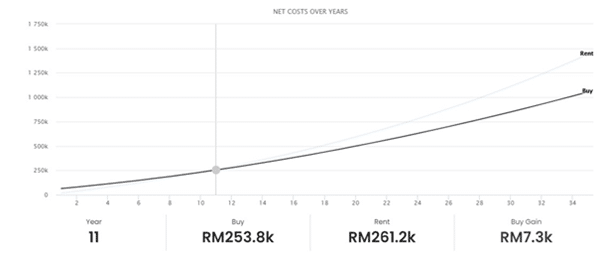
Comparison matrix reflecting financial trade-offs of renting versus buying property over time in Malaysia
Final Thoughts: There's No One-Size-Fits-All Answer
At the end of the day, your decision to rent or buy should account for financial preparedness, life goals, flexibility level, and market trends. Buying may be ideal for stability, while renting works well for short-term efficiency10.
Frequently Asked Questions
Question: Is 2024 a good time to buy property in Malaysia?
Answer: It depends on your financial readiness and market location preference. While it's a buyer’s market in some areas, others are still adjusting to economic transitions.
Question: Is renting a waste of money compared to owning property?
Answer: Not necessarily. Renting offers freedom and liquidity, often saving costs in the short to medium-term when compared to high mortgage commitments.
Question: What factors should I consider before buying a home?
Answer: Consider long-term goals, job stability, financial obligations, interest rates, potential appreciation, and exit plans.